Here’s Our Official Inclusion Policy
We're committed to providing inclusion training that’s accessible to all. In doing so, we can empower people to create more inclusive environments for those with divergent bodies and minds. Here’s how we do it:
Our aim is for every learner – whether they’re using a keyboard, mobile device, screen reader, voice input, switch device, or other forms of assistive technology – to be able to access our courses with confidence.
Browse our courses
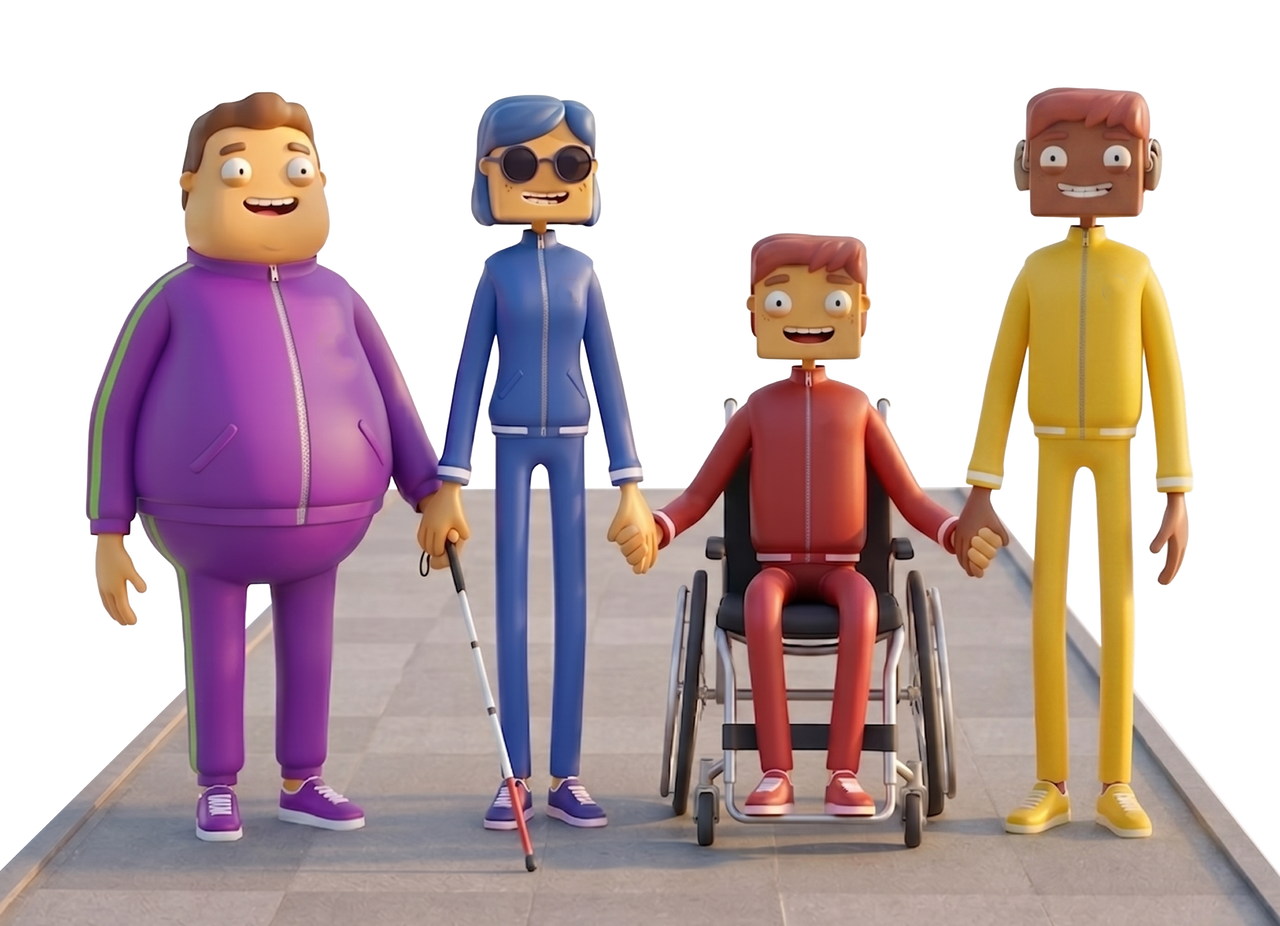

What You Should Be Able To Do On 0ur Site And Learning Platform
We design our pages, course modules, and interactive elements so that you can:
Navigate all pages, menus, learning modules, and interactive features using a keyboard, screen reader, or voice-controlled tools.
Adjust text size, spacing, and zoom settings without losing content or functionality.
Complete forms, course enrollment fields, and learning activities using mixed media and assistive technologies.
Work through our web and course content using clear headings, structural landmarks, and clear semantic markups
Understand key information without relying on colour alone.
Access links, buttons, and interactive course components using screen readers such as VoiceOver, NVDA, or JAWS.
Connect with meaningful content curated by inclusion experts and those with genuine lived experience.
We recognise that improvements are always needed, and we actively work on our inclusion initiatives to ensure our content remains as accessible as possible.
Our compliance status
Our website and learning platform are partially compliant with the Web Content Accessibility Guidelines (WCAG) 2.2 AA.
Some areas may require further development, and we’re in the process of resolving them.
This website is currently entering the launch phase and changes are ongoing. A full accessibility audit will be provided upon launch.
Enforcement Procedure
If you’re dissatisfied with our response to an accessibility concern:
In the UK, the Equality and Human Rights Commission (EHRC) enforces the Equality Act 2010. The Equality Advisory and Support Service (EASS) can provide guidance and next steps.
In the EU, user rights are protected by the European Accessibility Act (EAA). Users may contact their national enforcement bodies listed by the European Commission.
In the United States, accessibility rights are protected by the Americans with Disabilities Act (ADA). Concerns may be raised with the U.S. Department of Justice (DOJ).
Our commitment to continuous improvement
As an inclusion training provider, accessibility lies at the heart of everything we do. We’re always open to listening, learning, and getting better.
That’s why we’re committed to ongoing improvement and welcome suggestions on how we can better meet the needs of every learner.
BROWSE OUR COURSES